INTERVIEW

Change as Motivation

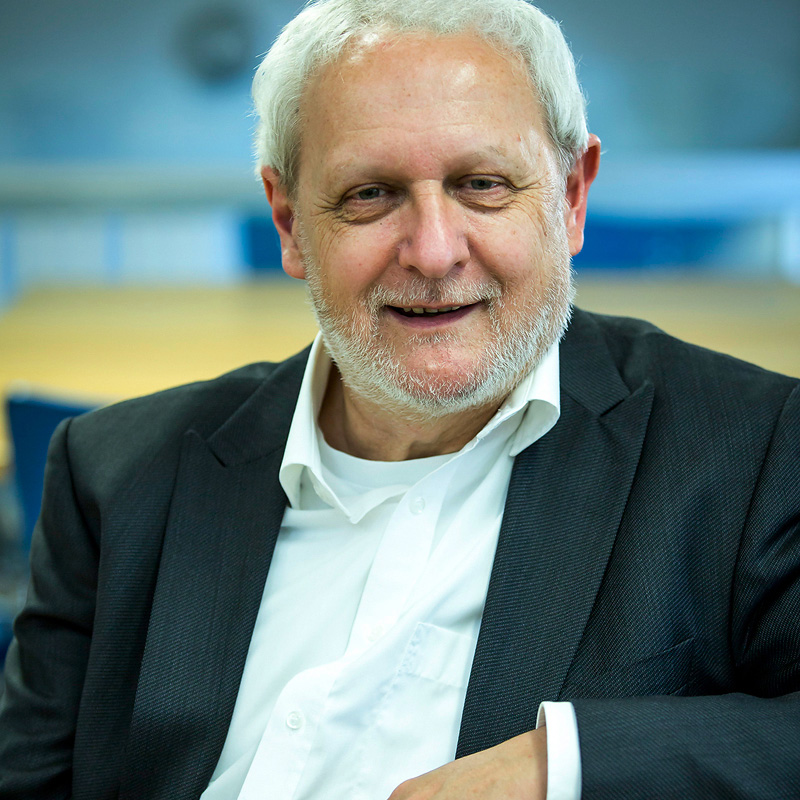
From traditional printing craftsmanship to the digital media world: René Theiler has not only witnessed the transformation of the industry, but has actively helped to shape it. As President of the Ugra association, he looks back on a varied career shaped by technological change, new production processes and a constantly growing understanding of quality. In conversation, he talks about his beginnings, formative milestones and how the media and printing industry have changed over the last few decades – and why experience, attitude and further training are more important today than ever.

Interview/Text: Theresa Mörtl

Mr Theiler you look back on a long career in the graphic industry. What originally fascinated you about this profession – and what keeps you in it to this day?

The range and versatility of the printing industry – or rather the entire media sector behind it – are enormous. It is a field that is constantly being driven by further development. Digital tools, new media formats and technical innovations ensure that things never really stagnate. This constant search for new opportunities, as well as the pursuit of efficiency and quality, continues to inspire me to this day – both professionally and personally.

You began your career with an apprenticeship at Orell Füssli. Which influences from that time have stayed with you to this day?

Clearly, it's the diversity of facets. I began my training in reproduction photography and got to know the diversity of the printing industry early on – from letterpress and offset printing to gravure printing and cartography. In my fourth year of training, I also had the opportunity to assist with the photographic design of the 100-franc banknote, which at the time featured the portrait of Francesco Borromini. This project was my first encounter with security printing – and with the high demands for precision and responsibility.

You managed a company specialising in scanning and image editing early in your career. How have you experienced the changes in this area?

At the start of my career, image editing was extremely time-consuming and expensive. The equipment required alone was very expensive. At the height of traditional retouching, each job could quickly cost several thousand francs. I remember a project where we integrated a house into a winter landscape for a property company – in the end, the bill came to over 10,000 francs. Today, images can be altered within seconds, sometimes with just a few text prompts using AI. Hardly any manual expertise is needed for this any more, the time it takes is nothing like what it used to be and hardware and software have both become significantly cheaper. This shows how radically production processes have changed. One thing is still important, though: the ability to critically assess AI-generated images or videos.

“Today, images can be altered within seconds,
sometimes with just a few text prompts using AI.“

Later you were responsible for around 70 employees as Head of Technology at typolitho ag – right in the midst of technological change. What was your biggest challenge?

typolitho ag was one of the first companies in Switzerland to combine typography and lithography before the introduction of the polygrapher apprenticeship. At the same time, there was a fundamental change in the working methodology when interdisciplinary teams replaced traditional departments. The biggest challenge was team building. This restructuring required numerous further training courses – and most importantly the intrinsic motivation of the employees to constantly develop themselves.

Digitisation and change processes have been a constant throughout your entire career. How has that changed your work?

Digitisation has created new business areas around printing, especially in the field of crossmedia. As a result, portfolios have been expanded to include agency services. One of the first projects I was able to deliver in this area was with a major sanitaryware manufacturer – including a website overhaul and interactive elements. Here, text, image and design expertise had to be brought together. At the same time, customers' expectations in terms of quality have increased. In this phase, I was able to work with Ugra on accreditations, certifications and standards for the printing industry.

Standardisation was also a focus during your time as Head of Education and Project Manager for Technology. Why are standards so central for you?

Customer satisfaction comes first – it is the foundation for long-term collaboration and reputation. Standardised processes allow us to reproduce results. This is particularly important in logo printing, where achieving colour values not just once, but consistently and precisely over time is crucial. International standards would be desirable – a process of harmonising the standards is currently underway, with Europe currently shaping the landscape of norms in particular.

You have also developed innovative training concepts. What makes good further training in a technical environment?

A prerequisite is always personal interest. I still consider on-the-job training to be the most effective form of learning. I also taught myself a lot of things. Mistakes are part of the process – you learn from them and develop new solutions. I also place a strong emphasis on group work as it promotes interdisciplinarity and simulates real team processes.

As a lecturer you teach sustainability and quality. What role does sustainability play in media production today?

A very large one. In view of the climate crisis and the scarcity of resources, sustainability aspects must be taken into account in all areas. In the printing industry, this mainly means: streamlining processes, saving energy and reducing how much material we use. A process that has been optimised according to the Process Standard Offset (PSO) not only saves time, but also ink and electricity – in some cases up to a third of energy consumption. Offset printing can be used sustainably, as long as we handle resources consciously and responsibly. Printing inks and solvents also offer a great deal of potential. And last but not least, buildings, working environments and infrastructures play an important role in the overall balance.

You worked with Hannes Zaugg to initiate the CAS Crossmedia Manager. What was the vision behind this?

The value creation steps before and after printing are often underestimated – such as web applications, digital channels or image editing. For too long, thinking has been confined to isolated disciplines. This is where the cross-media manager needs to start: at the interface between automation and profitability. It's about understanding communication planning, knowledge of modern media techniques and practical experience in cost-conscious action. We wanted to present the customer with new options through cross-media projects before the famous PDF bar.

“The value creation steps before and after printing
are often underestimated.“

You have been involved with Ugra for many years. What makes this institution special for you?

Ugra combines practical experience, engineering expertise and research. This combination makes it unique – and creates an independent, credible platform for quality assurance and further development.

You are still active even after your retirement. What motivates you?

Ugra is currently undergoing an important restructuring. Business activities have been reorganised with the founding of Ugra Swisstesting AG. The association remains the owner and continues to focus on standardisation, research and networking. I definitely want to be part of this realignment. Ugra must also continue to develop and expand its portfolio, especially in light of digitisation.

Where do you see Ugra in five to ten years?

Security will continue to play a central role. At the same time, I see great potential in laboratory work and in standardisation. The development of new business models will also become important. This requires networks, openness and the courage to look beyond the previous horizon. The Ugra team is very agile and can adapt to new projects and services quickly.

Read more stories in our customer magazine

TOP